Ministry logo

Ministry logo
Showing posts with label essex. Show all posts

Wednesday, 4 March 2015

Guest Post! #miniobjects from Essex

Mini objects

Hannah Salisbury, Access and Participation Officer, Essex Record Office
I like things that are the wrong size, both giant things and miniature things, but here I am going to be focusing on the smaller end of that scale. As well as entertaining me, our smallest items can also entertain and interest our visitors and readers of our blog.
Tiny things can also of course present their own conservation and storage challenges; they are much more vulnerable to being lost, and need special looking after.
Here are two of the smallest things we look after at the Essex Record Office, which have both featured on our blog and have both had special packaging designed for them by our Conservators to help keep them that little bit safer.
The first miniature document to feature on our blog was this one:
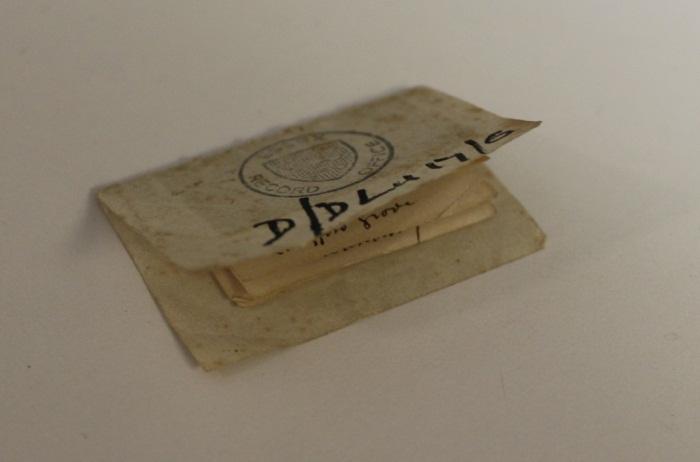
D/DLu 17/6 is definately very small.
It measures just 36 x 26 mm and it now lives in a specially made folder that protects it and makes it harder to lose.
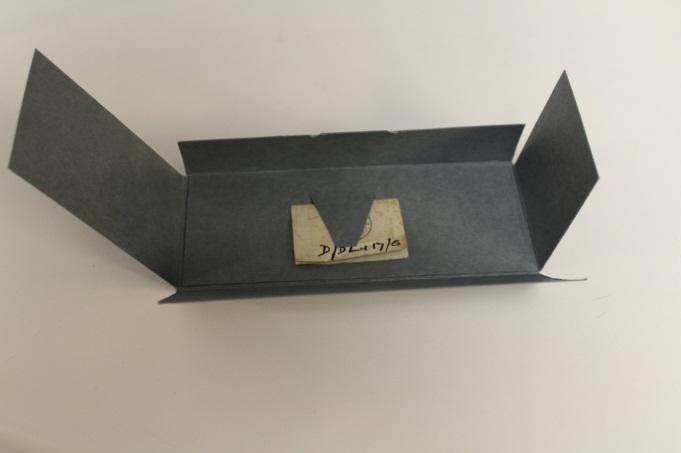
D/DLu 17/6 in its specially made folder.
It is a tiny sketchbook containing miniature drawings of local places by Clarissa Sandford Bramston, wife of Reverend John Bramston from 1832 (vicar of Great Baddow, 1830-40; vicar of Witham, 1840-72; Dean of Winchester, 1872-1883). We don’t know exactly when the drawings were made but they must date to before 1844 when Clarissa died. Perhaps someone with a strong magnifying glass and an interest in Essex architecture may be able to suggest a date?
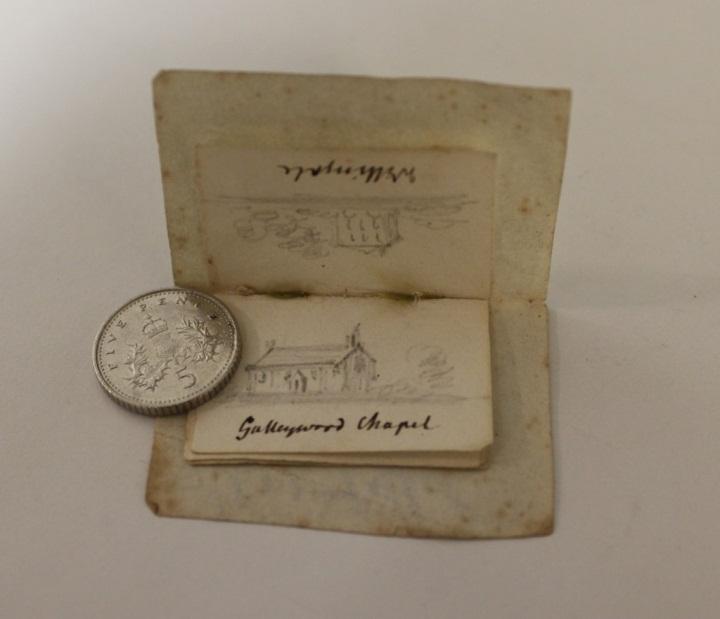
IMG_1095v
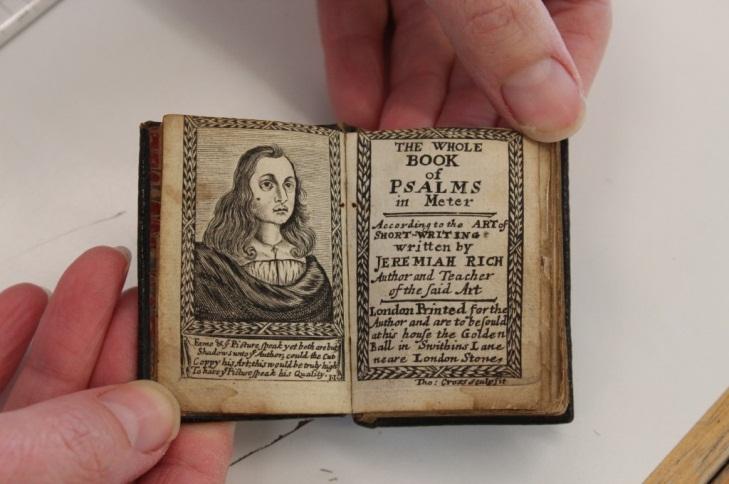
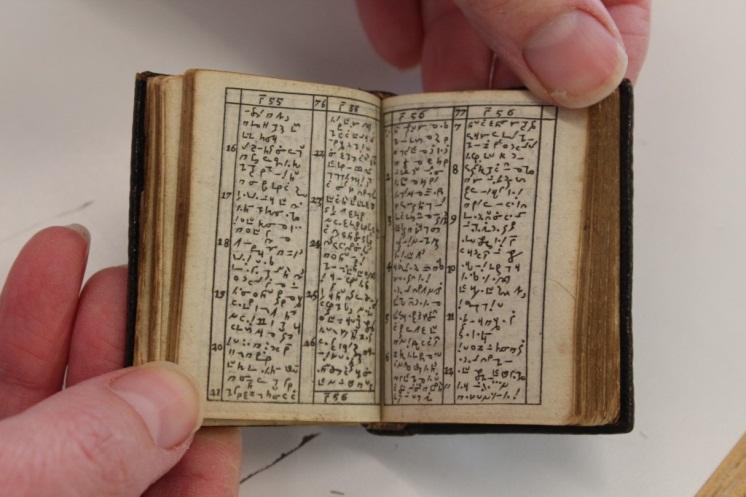
The next miniature item to feature on our blog may well be the smallest book in our collection. It is just 2.5 inches tall, and is seventeenth-century book of Psalms written in a kind of shorthand developed by a man named Jeremiah Rich.
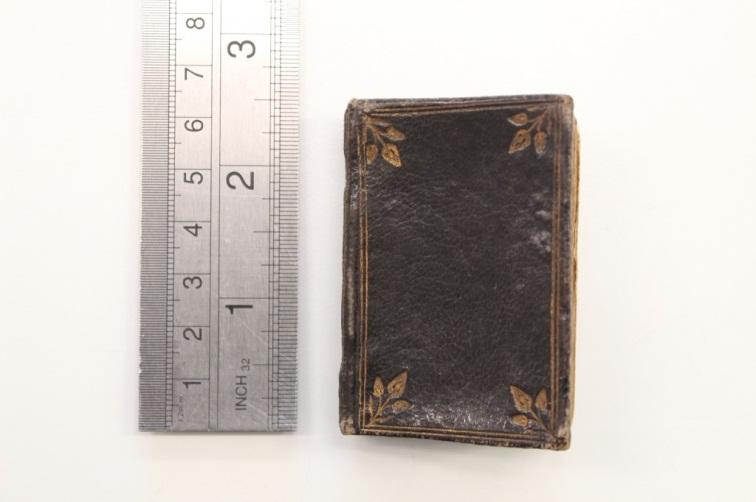
IMG_5407


IMG_5411


IMG_5412


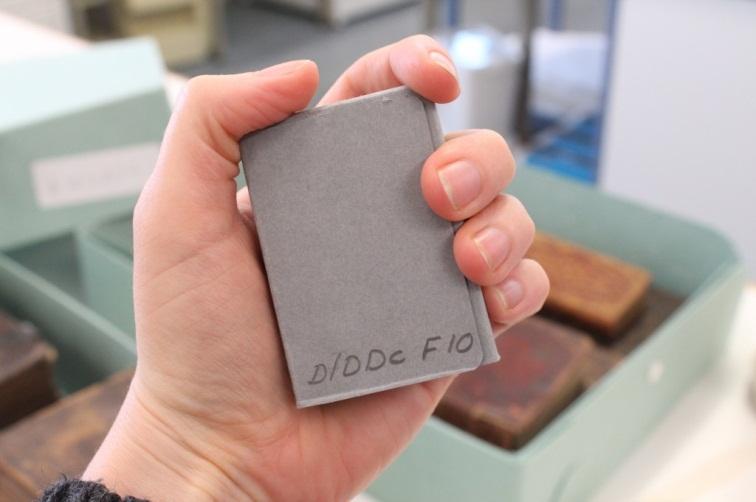
The tiny book now has its own small folder to protect it back in its box amongst larger neighbours.
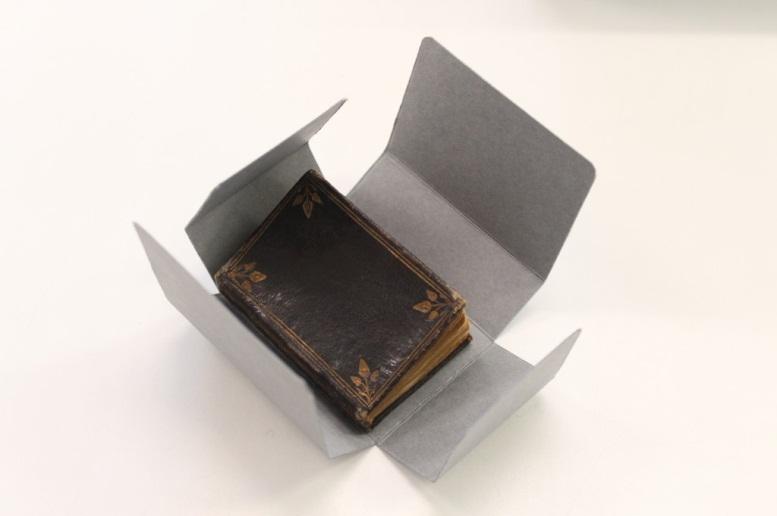
IMG_5415
IMG_5427

What is the smallest item in your collection? How do you use it with your visitors, and has caring for it presented you with any particular challenges?

Thanks Hannah for this fantastic post! Here's a bit more about our guest contributor:


I am Access and Participation Officer at the Essex Record Office, the storehouse of Essex History. It’s my job to find ways to engage people with our varied collections, from medieval Latin texts to twentieth-century oral history recordings. I grew up in Essex but have only really got to know the place through working at ERO. Essex has a bit of a reputation as a loud, brash, tacky place, but it’s an incredibly varied county, which includes coastal communities, historic market towns, acres and acres of agricultural land, and post-war New Towns. One of my main historical interests in the First World War, so it has been fascinating over the last year or so to explore the First World War documents in our collections and to share the stories that they tell. Out of work I enjoy photography, especially trying to show the more picturesque side of our county. You can see some of the results of my attempts here: http://toomanyphotos.wordpress.com/

Thursday, 22 January 2015

#Museumtweetup and the Social Media Manifesto

Hey everyone- we are so incredibly excited to be heading out of our normal stomping grounds and out to visit the Essex County Museums this coming Monday for their Tweet-up event! As you well know, there's nothing the Ministry enjoys more than a cocktail and the chance to natter about everything museums. But we are doubly pumped because we are going to talk more about our Social Media Manifesto. Developed during our workshop session for the MA Conference in October, writing the Manifesto was a great collaborative experience in figuring out how to do social media better. We can't wait to hear what the Essex crowd thinks! (or have your say using #museumtweetup)


Prepping for the tweetup has got us thinking about the Manifesto, the workshop, and how we arrived at the actual finished product. There were so many more discussions we had over the day which we just didn't have space for or we felt hadn't been generally agreed upon by the group. In the run up to the event, we posted these controversial Ministry proclamations to try to challenge the way people thought about museum social media. Going into the session, we didn't really have any particular outcomes in mind. We hoped that maybe just by rejecting some of the more cliched aspects of social media practice we would be able to get at something fresh and different.

The results of these conversations are what ended up in the Manifesto, but now maybe before we head to Essex is a good time to reflect on what those starting points were that brought out the most debate amongst our participants. We think some of these things just have to be said in order to get to the bottom of what we think about them. Two of our favourite contentious issues were:

Do we by making social media fun and cheeky, trivialise our jobs and the value of heritage?

If only young people use social media, does it really matter if we tweet things that would offend older demographics?

To us, these are just really fantastic questions that are a bit offensive but maybe we need to think about. In the session we used a lot of images from flyartproductions and LACMA's snapchat account which showed them, hmmm, engaging with art in a different sort of way.


Are these funny? Engaging to a younger audience? Or do they degrade the works of art and really the reason why we pay so much every year to look after them?

Maybe this isn't the case because this is how young people use social media. But are they the only ones following our twitter, instagram and snapchat accounts? Again, its a tricky question that begs some genuine thought. We gear our exhibitions for specific audiences, so why would our social media streams be any different. In fact, this is what the Brooklyn Museum has done with its social media strategy. 

This is why events like tweet-ups are so crucial for the museum industry. Of course it would be difficult to bring up these difficult questions in a formal institutional meeting. But that doesn't mean they don't need to be spoken about, and actually that informal sharing process can be the most informative way of tackling the issues. As one of our participants wrote to us after the session:

I think the main thing that struck me about this process was actually that social media has a much bigger reach and potential than I initially anticipated. Furthermore, I think that museums’ use of social media in particular has shown that social media isn’t solely for ‘young people’ but that actually it has the potential to be interesting, inventive and self-reflective for all ages rather than a self-aggrandising promotional tool for teenagers which is, to some extent, how it is often seen. In a strange way I think that museum’s use of social media has given social media a good name by making it something that is both fun and educational, both powerful and subtle. 


);