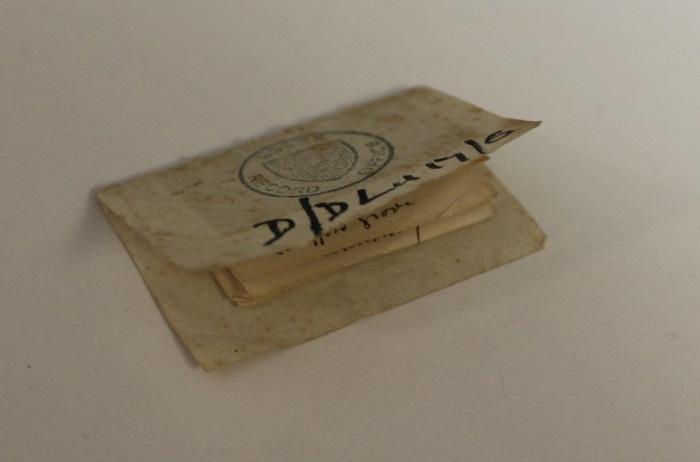
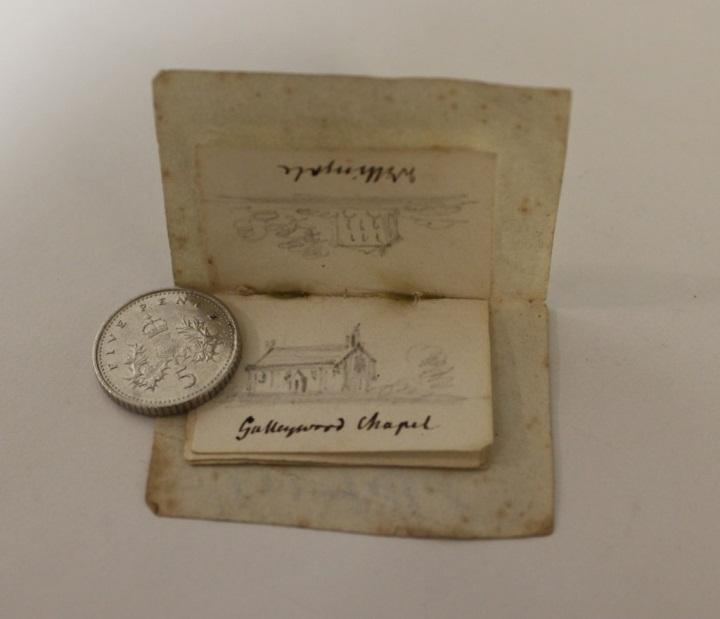
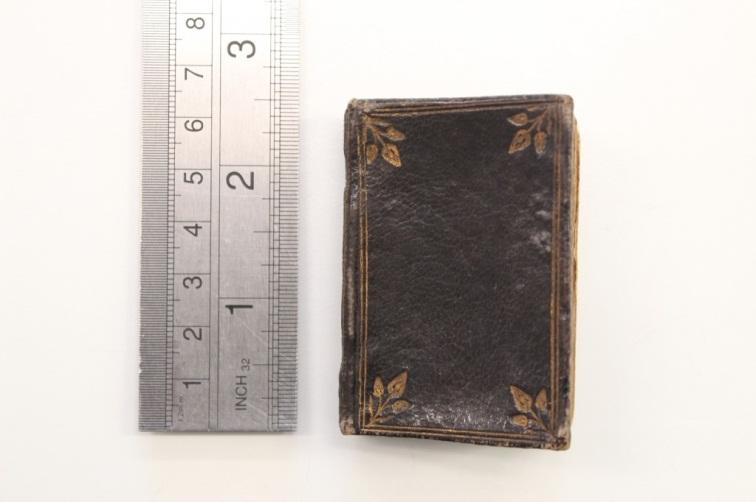
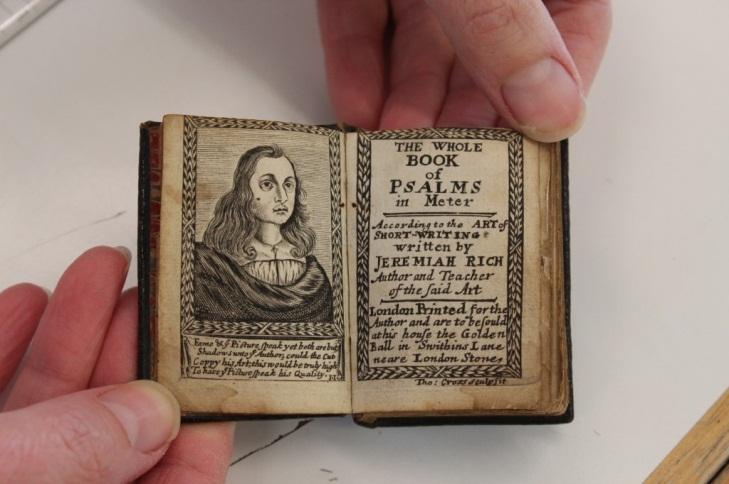
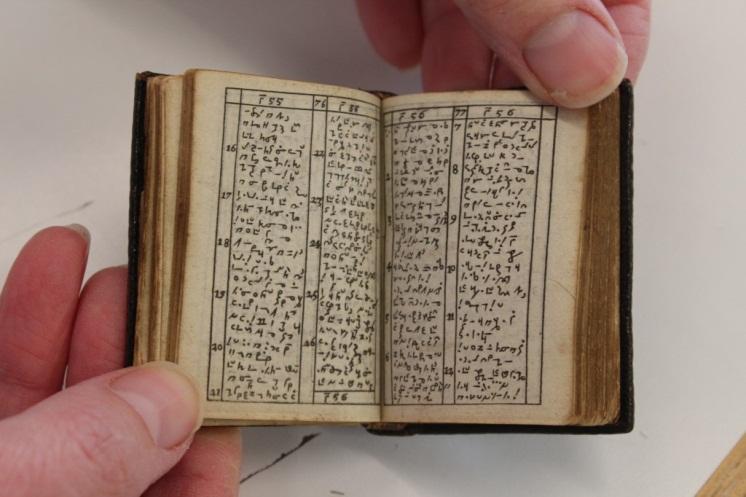
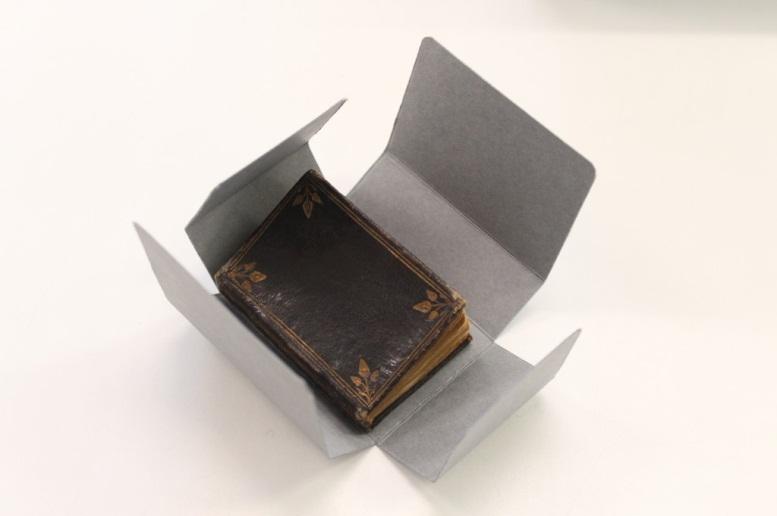
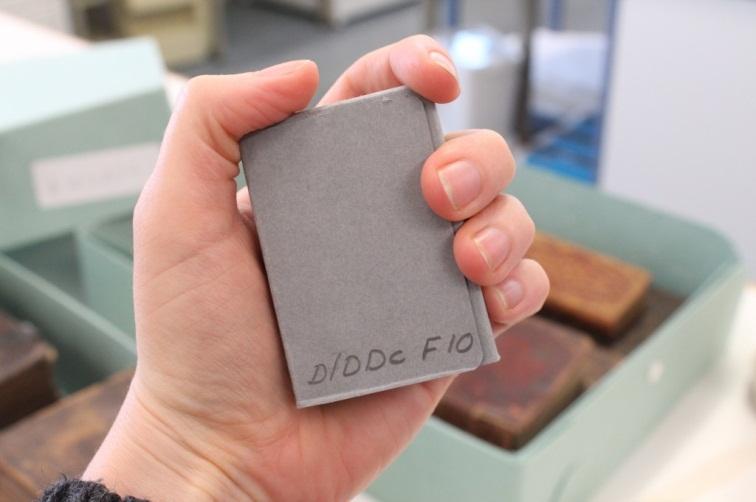
At the Ministry we tend to focus on the glamorous world of museums, but that doesn't mean to say we don't also love our sexy allied profession: the Archives. We seem to spend all of our time talking about what museum people really do, how we really are, and how you can get to be one of us, but what about all you budding archivists out there? To right this terrible wrong we approached a good friend of the Ministry Kate Tyte, who also happens to be giving a talk at Museums Showoff on the 4th of February called, 'The totally unorthodox guide to museum archives! Featuring Robots!
Nicholas Cage! Indiana Jones! And Beards!'
 |
| Kate wears this t-shirt literally every day. |
Kate graciously explains for the Ministry exactly what an Archivist does, why they are all tough as nail and most importantly why the bizarre and wonderful objects they work with are as amazing as anything in a museum store.
Life in the
Archives
Deep in the bowels
of the museum basement, in an area few humans venture into, we finally catch a
glimpse of our one of the most elusive of all the animals that dwell in the
museum ecosystem – the archivist. The archivist’s usual habitat is in quiet
storerooms and overcrowded offices, amongst stacks of boxes and rustling
papers. Let’s take a closer look at this interesting creature…
What are
archives?
Archives are materials
that have been created by individuals, groups or organisations during the
course of their life or work and deemed to be worth keeping permanently for the
purposes of research. They can be in any format, from notebooks, maps and
architects drawings to betamax videos and digital files.
How can you
become an archivist?
You’ll need about
1 year’s work experience to get a place on a 1 year masters course in archives
and records management. Many archives offer 1 year pre-course training
positions, though there’s a lot of competition for these jobs so many people do
voluntary work.
What do archivists
actually do?
Archivists spend a
lot of time appraising records – in other words putting the rubbish stuff in
the shredder – and cataloguing. Archives catalogues are hierarchical,
with records arranged into groups of similar records, and designed to preserve
the context, provenance, and value of records as historical and legal evidence.
Archivists also spend a lot of time answering enquiries, supervising
researchers, and promoting our service with leaflets, articles, displays,
online content and educational activities. We also drink lots of tea.
Skills needed
Archivists need
deep reserves of patience for cataloguing, as well as good people skills,
because researchers are often quite mad. Whether it’s a history of cow breeding
in eighteenth century Berkshire or the adventures of great aunt Ethel, they do
like to drone on about their tedious projects. It’s your job to nod and smile.
Sometimes it’s also your job to politely explain that they’re barking up the
wrong tree or have wandered into completely the wrong forest altogether. All
job descriptions will specify ‘the ability to lift and carry heavy boxes’ as an
essential skill, and they’re not kidding. Lifting boxes on and off shelves
gives archivists great upper body strength. This will be a bonus should you
ever decide to take up pole dancing to supplement you meagre income. Other
stuff they don’t specify on job descriptions can be equally important –
archivists love tea and cake. Curators are more trendy coffee drinking types,
but a coffee drinking archivist will be looked on with suspicion. But what
archivists REALLY need is an overwhelming passion for the past. If you can’t
get hours of excitement from a photo of a funny 1950s hat, an account of a Victorian
fistfight or a random graph about eighteenth century cow breeding statistics,
then this really isn’t the job for you.
Why it’s great
to be an archivist!
It’s mainly great
because of all those records about eighteenth century cows. No, really – I love
discovering weird stuff about the past. A previously unknown letter by Darwin
or a baffling statistic about the likelihood of dying in a horse and cart
traffic accident in the 1820s are just some of the things you might come across
in an average day. No matter how much people think ‘everything is on google
these days’, many things really aren’t. Archivists provide access to the raw,
unmediated evidence of the past – and it’s up to our readers to decide what to
make of it. We won’t tell you that the First World War was glorious and just
and we won’t tell you that it was a pointless omnishambles. We simply provide
you with the evidence and empower you to judge for yourself. I love helping
people with their research, whether it’s a personal quest or an academic
pursuit. From the repatriation of Aboriginal skeletons to Auntie Ethel’s lonely
death in a lunatic asylum and burial in an unmarked grave, it’s the archivists
who really know where all the bodies are buried.
What archivists think of the rest of the museum staff
Museum people are such sushi-nibbling, hashtag-using hipsters that the humble and tweedy archivist sometimes feels a bit inadequate. Museum curators have an awe-inspiring depth of knowledge about their collections and museum educators are startlingly creative – two things archivists can only ever dream of matching. On the other hand, your filing systems are universally terrible. You find archives baffling, and you’re always coming up to us, needing an obscure fact about a dissected Panda. But the more obscure the fact you need, the happier your archivist will be. It helps us to feel like the eccentric aunt of the museum family - We think you cool kids are amazing, and crazy, and we want to get drunk with you at Christmas.
Kate has been an Archivist for 8 years. She enjoys cocktails, cake and putting things in alphabetical order. Check our her blog about archives, the Victorians and mental health at katetyte.com or follow her on twitter @katetyte.