Ministry logo

Ministry logo
Showing posts with label medicine. Show all posts

Wednesday, 12 November 2014

November's #hipstermuseum: Museum of the Order of St John

Dearest followers and friends! It seems an age since we last revealed to you one London's hidden heritage gems that we call our #hipstermuseums. Well we think you'll like what we have in store for you this time. It's got art, it's got armour, it's got Shakespeare, a history of violence and a Crypt. What, you haven't heard of the Museum of the Order of St John in Farringdon? Let us illuminate you...


At some point or another, most Londoners will have ended up wandering (like drunk) around Farringdon on the hunt for the station, and run into this elaborate medieval looking gate structure. It looks pretty out of place in the world of Clerkenwell bars and offices, but hey, this is London and London is weird like that. But this fascinating building (part of a former priory completed in 1504) is a testament to the long history of the Order of St John (of St John's Ambulance fame). 


I think it needs to be said that of the many small London museum's we've visited, the displays have been very high quality. This one was no different, having been completely redeveloped in 2010 and looking up to date with its floating ship models and dense display show cases. The museum (free to enter) only actually consists of three galleries, including the 'Link Gallery' which is essentially just an interactive timeline. Their 'Maltese Gallery' which contains some of their oldest and most impressive pieces relating to the Knight's of St John's time on Malta is the most impressive, featuring archival documents from the 16th century, furniture, art and more. 


But maybe we are getting ahead of ourselves. Who are the Order of St John and why are they at all of my festivals and gigs? It's a long and complicated answer since the original Order of St John Hospitallers was founded in Jerusalem in 1080. Although they were technically Knights, the brothers of St John were more interested in peace, and healing specifically, as they looking after the medical needs of those going on pilgrimage to the Holy Land. In the 1140s a Priory for the English arm was set up in Clerkenwell, and actually the crypt from this original building still exists and is open to visitors! Most of the building though dates to the 16th century- although the changing whims of the royalty meant it was used for a variety of things after the dissolution of the monasteries. The contemporary St Johns was revived the late nineteenth century with the goal of providing medical care for ordinary people, and actually teaching them to look after themselves through first aid courses. Their mission has been pretty much the same ever since!


But like most museums attached the larger institutions, all the best stuff (the silverware, the paintings) is used to decorate the building. And actually in this case it's not so much the museum galleries but the building itself that's so interesting. For example, in the 16th century the building above the gate was the office of Elizabeth the I's Master of the Revels, who was in charge of approving all plays performed in the city. That means Shakespeare would have had to come here to perform all his works before they were seen by the public! Woah man, woah. Fortunately, you can get into all the fun hidden bits on the tours the museum offers twice a day (again free of charge!)


So there you have it, not wanting to give away all the secrets of the Order of St Johns. It's medical history all tied up with London history with a good dash of crusaders, priors and angry peasants. All for free! So next time you stumble across that famous gate, take the chance to look inside!


For more information about the Museum of the Order of St John visit:  http://www.museumstjohn.org.uk/index.html

Monday, 25 March 2013

Exploring the Sick City of London


At the Ministry we love meeting, promoting and participating in all of the exciting multi-disciplinary projects that London has to offer. From Museums Showoff to UCL Researchers in Museums there are so many interesting people doing great things at the moment. So it was only a matter of time before we heard about the Sick City Project supported by the Wellcome Trust. Organized by Wellcome Engagement Fellow Dr. Richard Barnett, the Sick City Project takes the history of medicine in London to the streets. 
Starting out our snowy tour at the Royal College
of Surgeons in Lincolns Inn Field

Building on the cultural and historical geography of our great city, the Sick City projects aims to engage the imagination my immersing participants in the history of medicine by bringing them directly to the places where it happened. Why read about medicine in London when you could walk the streets walked by the historic persons themselves? Get out of the library and get into history!

Heading up the strand towards the heart
of the City 
Sick City offers a variety of tours from exploring tropical diseases in Greenwich to the sex trade of Soho, but I opted to attend Richard Barnett’s ‘Sensational Bodies’ walk organized through the Museum of London. Accompanying the ‘Doctors, Dissection and Resurrection Men’ exhibition, Barnett took us on a tour of anatomical teaching in the heart of London, covering the rise of the surgery from the four humours to the foundation of the Royal College of Surgeons in Lincoln’s Inn Fields. Even living in London, it’s sometimes hard to really appreciate the physical closeness of medical London. But walking from Holborn along the Strand to St Paul’s and St Bartholomew’s Hospital, its easy to see how the trade in bodies and anatomical knowledge was linked. Surgeons and student, physicians and booksellers, body snatchers and the poor, all milled together within a claustrophobic two miles at the centre of the city.
You can see why people weren't too keen on dissection
in the early eighteenth century. 

I was also thrilled by the amount of emphasis Barnett placed on the importance of the two brothers who revolutionized surgery and anatomy teaching in the 18th century: William and John Hunter. I know I am incredibly biased, but it made me happy. I also learned that the Hunters’ pioneering anatomy school in Covent Garden was located right where the Apple store is today. The history of London is all around us, if only we knew where to look. Throw in a ghost story or two, and I was one happy girl (despite the terrible weather- a danger of any outdoor adventure in London).

Without sounding like too much of an advertisement (note that the Ministry is not affiliated with Sick City!), you’d be crazy not to try and get yourself on one of these walks! You can find out more about the project at sickcityproject.wordpress.com plus download their app, podcasts and see future Sick City events. You can also follow them on twitter @SickCityProject. 

Sunday, 13 January 2013

Anesthesia Heritage Centre

I recently spent an hour  at the Anesthesia Heritage Centre. Yes, this is a very specific medical museum but it really turned out to be a great one to visit if you have a spare half an hour (and an appointment) the Museum is situated in the basement of The Association of Anestheticists just behind Oxford Street and past the BBC Offices - so a great place to get cultural before shopping and food. 

  The Victorian town house was of course stunning but what I really loved about this place was how well the space was used. Every inch of the cabinets were filled with interesting objects, documenting the history of anesthetics and their recreational uses.

 Prior to 1846 few operations could be performed because of the sheer amount of pain a patient would go have to go through, however the recreational use of sniffing gases and vapours helped pave the way to painless surgery - possibly the biggest discovery in modern medicine.

A great summary of the history of anesthesia can be found here if you can't access the museum:

http://www.blatner.com/adam/consctransf/historyofmedicine/4-anesthesia/hxanesthes.html


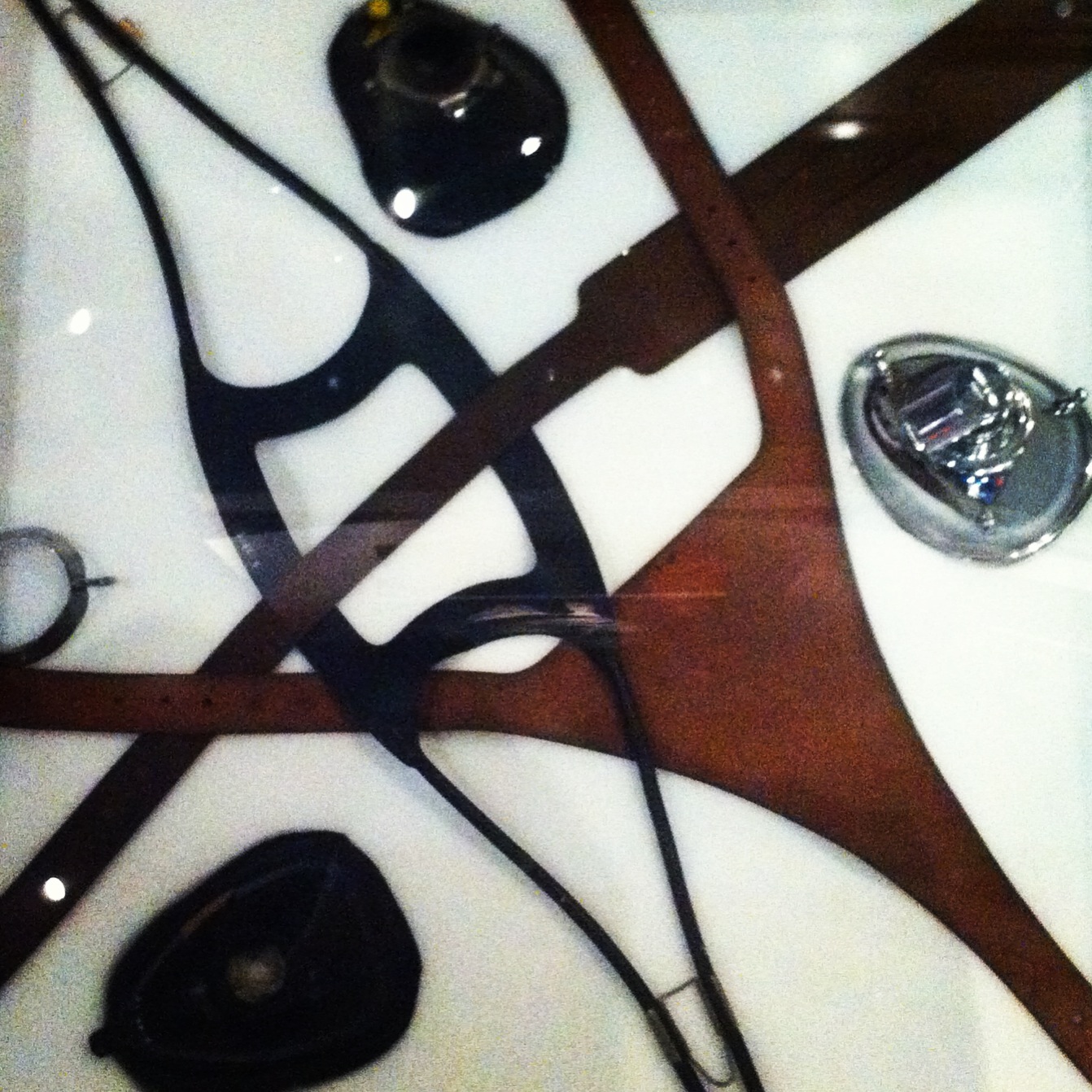
Harnesses used for Anesthesiology.
I imagine this space is often used for research and less so for a visit but if you are a bit of a medical history geek I strongly suggest booking an appointment (it makes you feel like a Victorian Gentlemen) and have a nosey. 


Beautiful bottles

The Museum is free but it is highly recommended that you make an appointment by emailing heritage@aagbi.org

The Association of Anaesthetists of Great Britain and Ireland
21 Portland Place
London
W1B 1PY
Tel. 020 7631 1650
Fax. 020 7631 4352


http://www.medicalmuseums.org/Anaesthesia-Heritage-Centre/


Sunday, 6 January 2013

Exhibition Review: The Lost Prince at the National Portrait Gallery

The Lost Prince: The Life and Death of Henry Stuart does pretty much what is says on the tin: tells the story of the (very brief) life of Henry Stuart, Prince of Wales (1594-1612) through portraits of himself, his family and his court. If you are like me and have only a very shaky grasp on this era in British history, Henry Stuart is not in fact one of the princes in the tower, but the son of King James I, successor to Elizabeth I. 


I can't say it's the most inventive exhibition I've ever seen, but what is really so wrong with a few rooms of impressive paintings? The larger than life scenes of early 17th century royalty are beautifully conserved in all their regal glory. I find the people quite sad looking, all pale and fragile but that’s historical context for you. 

What really shines about this exhibition is not so much the portraiture but the objects which are shown alongside them. The exhibition includes a copy book by the young Prince himself showing him improving his handwriting, complete with disparaging notes in Latin by Henry’s tutor commenting on his childish script (which looked just fine to me). The Royal Armouries have lent two ornate suits of armour worn by the young Prince. They stand barely 5 feet tall, and somehow really humanize Prince Henry who suddenly seems less like the larger than life figure in his portraits, and more like a little boy playing at king.

Undoubtably my two favourite objects are located in the last room which explore Prince Henry’s early death at 18. One is a wooden effigy of the Prince which would have been laid out for mourners after the body was buried. Although it originally included luxurious robes and life-like wax hands and a head, now all that remains are some roughly-human shaped blocks of wood. Amazing how such basic material can be embedded with such meaning so as to become the body of dead child. It’s dilapidated state makes it even more haunting, displayed in a perspex case/coffin. 

You probably could have guessed that the highlight of the exhibition for me was the autopsy notes made after Prince Henry’s death. When such a seemingly healthy young man dies so suddenly, its no supririse that his personal physician was the one to blame, some even going so far as to suggest he was poisoned by his own doctor. The autopsy report is written in English so any curious visitor with an eye for 17th century script can read for themselves about the clear liquid found in the Prince’s brain, or the blackened state of his lungs. The details provided by the doctor’s notes and the autopsy report have allowed modern doctors to diagnose the Prince with typhoid fever.

Overall, it’s a very enjoyable if old fashioned exhibition. If you are a fan of British dynastic history, then get down to the National Portrait Gallery quickly before the exhibition closes on the 13th of January!

The Lost Prince: The Life and Death of Henry Stuart is at the National Portrait Gallery until the 13th of January. http://www.npg.org.uk/whatson/the-lost-prince-the-life-and-death-of-henry-stuart/exhibition.php

Sunday, 18 November 2012

Review: Death- A (Critical) Self-portrait

It is important to bear in mind when reading any review written by a member of the Collective that we are museum professionals, and as such view exhibitions in a very different way to the general public. When we walk into a gallery, our eye is immediately drawn by an exposed socket, a poorly hung label, or a badly conserved object. I hope with that in mind my thoughts on the Wellcome Collection's current exhibition 'Death- A Self-portrait' will be a bit more in perspective.

It seems that these days the Wellcome had made quite a name for itself with it's blockbuster exhibitions. Medical history is in vogue, and the Wellcome with its resources, vast historic collections and penchant for merging medicine and cutting-edge art is well placed to be a hot spot in the museum world. After their Miracles & Charms exhibition in the autumn, I was expecting to be blown away by Death. And well, I was not.

The thematic rooms by room organisation of the exhibition seemed stilted, and every inch of surface was covered in frames. I was in information overload after the first room. Visiting as I was with other museum professionals, we were all slightly irked by the low height of the labels, and the interpretation of some of the art works (but using interpretive labels with art is in itself very contentious). On an aesthetic level, the art works exploring death throughout time and across cultures is very beautiful. Yet everything seems a bit less chic, a bit less 'Wellcome' with fake furniture and fire places.

Just when I was getting ready to right off the exhibition, I came to the last themed section of the exhibition called 'Commemoration". Here, contemporary art exploring death and ancestor worship in South America was contrasted with stunning objects from Tibet including gilded skull bowls. Now here is what the Wellcome is known for: bringing together fascinating material culture with innovative art from around the world. I had forgotten for a moment I was in the Wellcome at all.


Then again, every object in the exhibition is from an external collector, Richard Harris. And while I'm sure Mr. Harris and the (external) exhibition designers had a very fun time putting it all together, it just doesn't feel very much like the Wellcome team was involved. Maybe it's because everyone is busy now preparing for the Wellcome Collection's very exciting development project (http://www.wired.co.uk/news/archive/2012-10/24/wellcome-collection-extension) but Death feels imported.

This is looking at the exhibition from a very critical and museum-biaised perspective. I can guarantee if you come by to visit, you will be amazed by beautiful Goya sketches, gruesome pictures of turn of the century dissections, and some ambitious art. I only wish Death had that off-beat and chic energy the Wellcome is known for, that special something that could help it compete with the Museum of London's enormously successful Doctors, Dissection and Resurrection Men. Worth a visit, but this exhibition feels more like the Richard Harris show.

Death: A Self-Portrait is on at the Wellcome Collection from the 15th of November 2012 to the 24th February 2013. Free Admission. http://www.wellcomecollection.org/whats-on/exhibitions/death-a-self-portrait.aspx

Wednesday, 14 November 2012

Waxing Lyrical at the Science Museum

Here's a blogger we really dig, Emily Yates, Object Conservator at the Science Museum talking about her work on an 18th century anatomical wax model for the Museum of London's Doctors, Dissection and Resurrection Men exhibition.

I personally find conservation work fascinating, especially when the goal is to make wax organs look bright and realistic. Here's hoping we can get her to join us in the collective. Do you think she's curious enough?

 http://sciencemuseumdiscovery.com/blogs/collections/waxing-lyrical/

Sunday, 11 November 2012

In praise of 'Resurrection Men'


Much praise has been lavished on the Museum of London's 'Doctors, Dissection and Resurrection Men' exhibition. With its gruesome topic, expensive exhibition design, and aggressive Tube advertising scheme, it has been an instant hit. True, it is very well done, visually stunning, thoughtfully laid out and atmospheric. But is it really that good? I would say, yes, yes it actually is. Because not only has the Museum of London delivered a stylish show, it uses visual media to perfection to entertain and engage the visitors with the otherwise dry story of the politics of the human body. 


What the exhibition does so well can be summarized not in any of it's displays of impressive wax works or skeletal remains, but in the media space isolated from the exhibition by red plastic curtains. Visitors are invited to sit in the round (an echo of an operating theatre?) and listen to admittedly simplified versions of the arguments which surrounded the controversial Anatomy Act of 1832. We hear voices from both sides of the issue passionately debating the main topics addressed by the Act, accompanied by evocative sound effects which attempt to bring the visitor directly into the Parliament debate. As I sat and listened to each side passionately condemning or defending surgeons using the bodies of the unclaimed poor in their training, it dawned on me that at no point in the exhibition had the 'resurrection men' actually been condemned. 

Most people come to an exhibition about grave robbers for it's morbid fascination, but the Museum of London has managed to deliver an exhibition that is deliciously dark while actually contextualising the 'unholy' union between London's schools of anatomy and the resurrectionists. It would be far to easy to look back on this period of time in disgust and the exhibit is very careful to at all times ensure that the highest of surgeons is implicated alongside the most notorious of body snatcher. Listening to the arguments for and against the Anatomy Act, it becomes clear that the hunched thieving characters we know today from books and films were very clearly a product of their social context. The interest of the body snatching phenomenon lies as much in the invention of 'man-traps' as it does with the rapid expansion of the urban population in early nineteenth century London, or wide-held religious beliefs around literal resurrection. Quite rightly, the exhibition ends with a meditation on issues of consent and our bodies as it stands today, and we can see that the issues faced by some of our most memorable surgeons and their unfortunate 'Subjects' is very much still applicable today. 

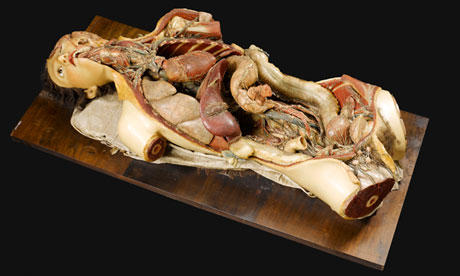
18th century waxwork anatomical model used to train surgeons
on display at the Museum of London
I think the Museum of London has really tied together some of the things that the museum field is trying to achieve in it's temporary exhibitions. It's a crowd pleaser for sure with it's macabre subject matter, anatomy inspired wall-paper and well-designed interactives. But the exhibition never patronises the audience and never criticizes part people for their actions, but rather presents them in the social context. My only criticism is I wish there had been more human remains to supplement the very well placed archival material and wax models. I know using human tissue is in itself a bit contentious, but if you are going to have some (which the exhibition does) then use it to effect. My heart goes out to rooms and rooms of disused wet specimens from bodies hawked by the resurrection men to London's most famous surgeons. Maybe I just love pots more than bones.

Resurrection Men is a well designed and immersive exhibition with plenty to take away. You could go and just enjoy meeting some of London's most famous body-snatchers in the form of Williams, Bishop and May, walk the streets of medical London, see the bones of anatomised corpses pulled from a hospital graveyard, or have a good think about organ donation in modern medicine. This is a show we'll be talking about for years, so don't miss out!

Doctors, Dissection and Resurrection Men is on at the Museum of London until 14 April 2013. 

);