Ministry logo

Ministry logo
Showing posts with label research. Show all posts

Monday, 14 May 2018

On PhDs and museum jobs

Recently I've seen a number of conferences and symposiums aimed at PhD students exploring 'alternative careers' outside academia. With recent strikes and the continuing precariousness of short term and zero hour teaching contracts, pursuing a traditional academic career has become unattractive to many recent postgraduates. 'I'm planning to work as a museum curator' one such student said to me recently. Indeed, museum work and curatorial jobs are often highlighted as a logical alternate career. Personally, I think this is an incredibly irresponsible and misguided message to give PhD students and here's why. 


First off, let me just say that I think PhDs are great. I've got one, and I love it. PhDs have so many transferrable skills that can lend them to a variety of sectors - the ability to work methodically, to manage projects, to be self-guided in work, to write convincingly, to research thoroughly, the speak publicly and many many more great attributes. However, a PhD does not a museum curator make. Gone are the days in which curators were simple very specialist in a particular field, sitting in offices, researching all day long and producing niche but well research books. Just as this kind of isolation no longer flies in academia, it's definitely not the case in museums.


To work in a museum is arguably a vocation - it is a career typified by a very specific set of specialist skills. Whether you come at it from an MA in museum studies or from practical experience, museum workers need to be skilled in fields as wide as collections management, registry, documentation, Spectrum standards, hazards, accreditation, object handling, interpretation planning, public programming and engagement, text writing, legal frameworks and many many many more things. Museum professionals take years to build up their specialist skills which enable them to get jobs in a highly competitive field.

When this person at a recent exhibition opening said, 'I'm planning to be a museum curator', I naturally replied 'Oh have you worked in a museum before?'. 'Oh no', they informed me 'but I've always loved them.' Yes, museums are amazing and to work in them is amazing. We are all here because we love museums. But personally, I think the idea that one can just slide into museums is a bit insulting to an entire field of people who have spent years working their ass off to gain the experience needed. This is particularly true when it comes to curatorial work - which is often particularly coveted by those inside and outside the field. These days, curators need not only research skills but collections management experience to boot, not to mention a huge dose of public engagement prowess. 

I also feel like I have to mention in case this might not be apparent to students in the academy, museum work is terribly paid. Like, really. You'll see starting salaries in London museums as low as £16k per year (although we all agree that's terrible). If you are lucky, you might join the sector on £23k. For a full blown specialist curator, you are looking at £30k. Many postdocs get paid £40k to start, and senior lecturers can expect to earn between £45-55k. Plus that short term contract thing - yeah we have that too. It's a highly competitive and notoriously underpaid sector so, let's not get too romantic about the museum field. 


Now this isn't to say there isn't a place in museums for PhDs. For example, many institutions hire specific research-based roles which rely on drawing in new hires from the academy. The Science Museum recently appointed posts aimed at incorporating academic research into their new medicine galleries, and the National Army Museum is looking for a Head of Collections Research with academic chops. Research roles a great initial way for PhDs to join the museum community and start to build the skills they will need to one day become curators. Not forgetting of course that there is so so much more to museum work than just the curator! From learning teams to public programming, fundraising, marketing, social media and more - you'd be surprised how you can develop in the field. 

I'd also mention that museums LOVE to work collaboratively with academics. It is definitely possible that you can get some great experience of exhibitions through collaborative projects based at universities. If you do get to work on something like this, take all the opportunities you can to learn from your museum colleagues. 


My aim here isn't to put a downer on anyone's ambitions. I absolutely love working in museums and want to support others into the field. However, I think its important to be realistic about what museums can offer in terms of salaries and opportunity. Getting a museum job is just as competitive as academic work, so don't expect is to be an easy alternative to lecturing. And as for curatorial work, its some of the most highly sought after - so be sure to think big about the different career paths museums can offer you.

Personally, I am a museum curator with a PhD. But I'm not a curator because I have a PhD. In fact, I was hired for the job on the basis of my museum experience and in particular my years of work managing collections and supporting researchers. That I had a PhD in a relevant subject was something that was icing on the cake and maaaaybe got me over the line. But the core of what a museum worker needs is practical experience, demonstrable achievements and hard work. 

Practical experience of working in a heritage environment will be 100% necessary to getting into the field. So, PhD or not, you, like the rest of us, will need to get onto some voluntary work, a graduate scheme, a paid internship, or some other entry level role. Basically, if you've never worked in heritage before, it's time to get some experience. And if you are serious about museums, it will be well worth it for the job you want! We've even made a handy getting into museums guide to get you started. 

Thursday, 16 July 2015

Where did this come from? Provenance and research

Today working away on some research in a museum archive, I overheard a researcher who was seemingly constantly getting up to ask the archivist questions. While they were, of course, being very polite, I personally found their questions incredibly annoying. ‘Your catalogue only tracks the provenance of this item to this date… what happened before that?’ “Can you ask a curator? Why wasn’t this included? You don’t seem to have the catalogue of the previous owner two times removed, why is that?” Oh dear researchers, maybe it would be helpful to explain just a wee bit about provenance.

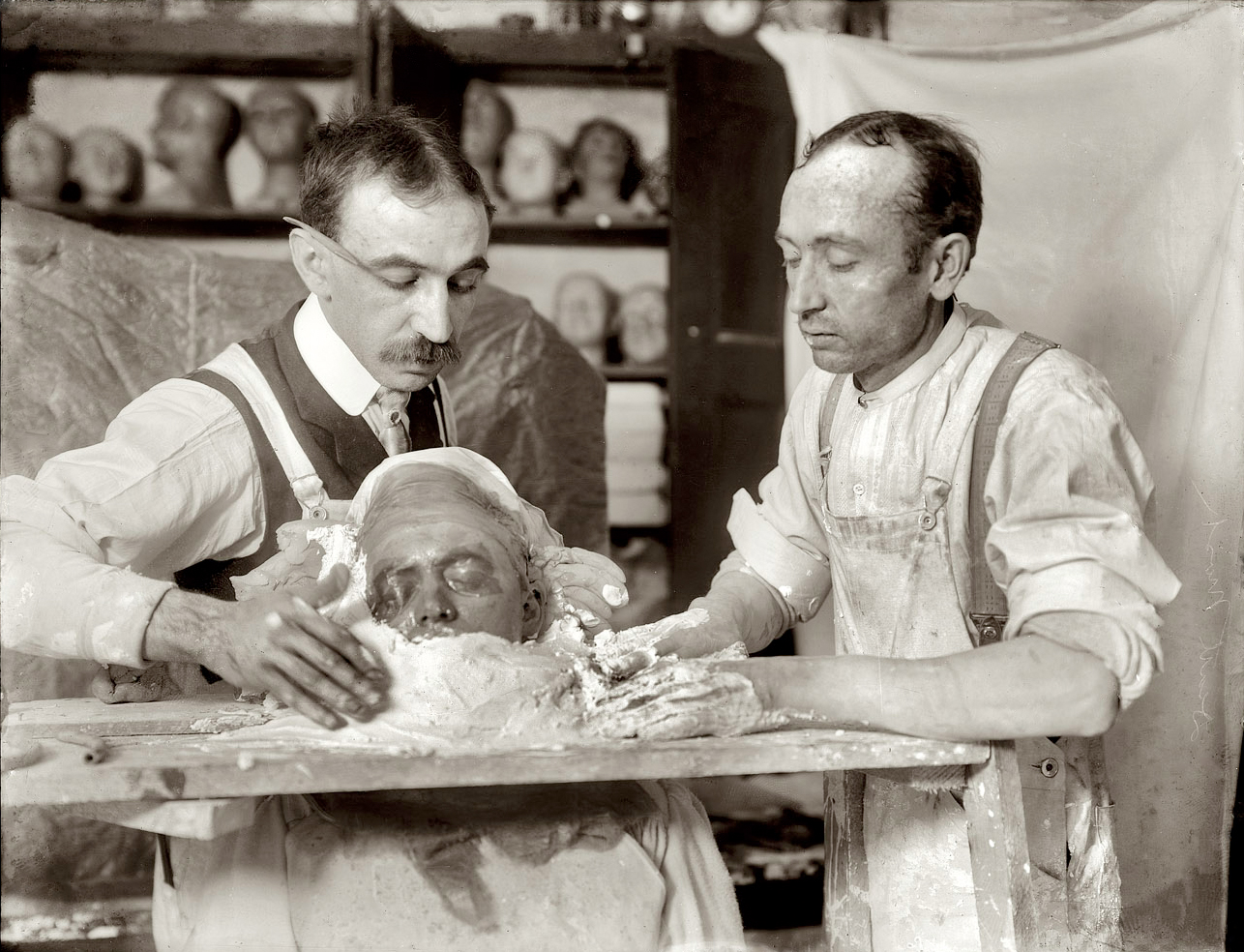
Making a death mask, c.1908 
Provenance is all important in a museum, for lots of reasons – curatorial, legal etc. But let’s get this straight, provenance is a bitch. By provenance, we mean the history of any object or artifact from its original creation to its arrival in the museum. As in - who owned it? Who made it? Who sold it? Prized are the few objects in a collection which have a clear, complete and above-board history that resulted in them sitting in our display cases. Much more often the history is pretty damn complicated.

This particular enquiry I overheard was (and I’ll try to be general) related to a death mask that ended up in a museum collection in the early 19th century. The mask itself was bought at auction, so really the beginning point of the provenance that was available was the name of the donor to that original collection as provided in the auction manual. And that’s is, that’s all the information there is. The researcher seemed puzzled by this, but personally I thought that was pretty thorough. Some enterprising curator had not only tracked down the acquisition info from the early 19th century, but also did enough research to get their hands on an original acquisition catalogue. Is it the museum’s responsibility to know the history even further than that, as this researcher way implying? Yes and no.

Yes it would be amazing if museums have the time to do that extensive amount of provenance research on every item in their collection. But we are all overworked and look after thousands if not millions of objects, so there’s logistical reasons why not. Secondly, sometimes that information just does not exist- it has been lost to the sands of time. Most auction houses kept their sellers information private, or destroyed it, so if your research is coming up to an auction, the buck might stop there. Also not forgetting that the Victorians (who founded most of our museums) were pretty slapdash when it came to documentation anyway. 

In certain cases museums really do have to do a complete provenance check on an object, and that's usually when its going into an exhibition. To comply with the conditions of loan agreements, museums have to be able to prove they are the legal owners of an object or they can end up in some nasty trouble with spoliation. So in a way, yeah, it is a museums job.
Stevens auction catalogues

But on the other hand, no, it’s not reasonable to expect a museum to have a complete provenance of everything in their collection. Especially in this case where the institution had traced the original acquisition, but not further. That would be the cherry on top, but it’s certainly not standard.

But actually this is what makes researching in museum collections so exciting- the opportunity for discovery! Doing ‘object biographies’ has become all the range in academia these days and resulted in a huge surge in research interest in museum collections. That’s because if you can figure out the exiting life of an object that’s a great opportunity for original research! If the museum had already done it, it would be worth your time. And in fact, this is why museums love to help researchers- because we need this kind of research to be done!


So basically, don’t expect museums to just have the answers to your provenance questions. You’ll have to do the digging yourself but we promise it will be an exciting journey!

Thursday, 11 June 2015

Why won't you respond to my email and other woes of academics

So here’s a bit of a spoiler for you – I (Kristin) am currently taking a break from museum work to do my PhD. And something I’ve found about being a museum professional in the academic world is that you are something of a unicorn. Everyone wants to hear about this mysterious ‘museum sector’ – who are these museum people? Where do they come from? How can I work with them? And most importantly, how do I get a museum job? At a panel at my university today, I was asked one of the questions I hear the most and one I think really deserves a full response. A fellow PhD asked me:

Do museums really want to help researchers if they are so busy and cash-strapped? If they really cared they would respond to my emails.


First of all can I just say, despite the reputation we might get from a handful of grumpy people, museums love, nay EXIST, to help with research and engagement. Please don’t get the impression that museums don’t want to help you, we do, and in fact if we are a national museum we legally have to. But your point about museums being busy and cash-strapped it well taken, and this, not any other reason, is why we take so long in replying.

That said, there are some things that academic researchers could do that will ensure you get the best response in the fastest time.
  • Please check the online catalogue first. If you email a question like: ‘I’m interested in Victorian pottery, what do you have of that?’ there is a pretty high likelihood that enquiry is getting dropped to the bottom of the queue. We aren’t there to do your research for you!

  • Then again, something like: ‘I’ve identified these three objects I’d like to know more about, plus anything else that comes to mind’ is fine.
  • That said, please please PLEASE include reference numbers in your emails. Museums look after literally thousands of objects and just saying ‘the 1850s textile from Burma’ is specific but likely not good enough. It helps us to send emails to the right person and keep track of the enquiry with a number.
  • Be realistic about the number of objects you enquire about. Please be sure you genuinely need to know about everything you are asking for – researching a huge object lists takes lots of time, especially if you only think you are really interest in one or two.

  • Similarly- do you really need to see those objects? Likely a picture will do and what you really want to see is the object file- the provenance. There’s no point in physically getting an object from an off-site store when really what you want to know is who owned it, collected it etc. Be sure to ask for the right thing.
  • Be polite. It sounds like the most basic one, but sadly often neglected. Yes it is (in a way) curators’ jobs to help you, but they are doing it on a tight schedule and budget, so be kind.


Although people may not realise it (and it may not always feel this way for museum people) but research requests are actually really important and helpful. Tracking the number of requests certain objects and files get can be important for funding bids for conservation or digitisation projects. In depth research on the collections by external sources can be an important resource that museum people just don’t have time to do. Theses and published articles can be a boon to showing a museum’s research impact and utility and often make their way into grants and annual reports. 

So since a museum is helping you out, be sure you share and share alike. Let them know when research you did using objects is being published and send them a copy. This goes in files to help future generations and can actually help the doors stay open!

Museums and academics have in the past had a fairly tense relationship, but we don’t think this has to be the case. If researchers understood how to work with museums, and remembered to pay it back in terms of research output, everything would be rosy. And maybe curators would be less grumpy about answering their enquiries… maybe.


Monday, 25 May 2015

For the love of collections: AHRC #whocares project

A few weeks ago we were lucky enough to be invited to a concept development workshop on a topic close to our hearts: caring for unloved reserve collections. As a part of a larger AHRC funded project called Who Cares? Interventions in Unloved Collections, the leaders of this initiative are asking some big questions like: What does caring for collections really mean? Is it possible for a curator or researcher to ever be objective about the collections they look after? How can we exploit the intense emotional connection museum people have for their objects? As museum professionals ourselves, we think these are exactly the right sorts of questions to be asking.

One day someone will want you, rows of pig skulls
The general public tend not to appreciate that what they see on display is only ever a very small proportion of the collections a museum holds. Securely locked away in cold dark stores, the great wealth of a museum in the form of slightly broken, repetitious, and unfashionable objects sit waiting for someone to come find them. But just because stored collections aren't on display doesn't mean they aren't loved: museum people are notoriously protective and emotionally attached to their objects, especially their slightly wonky, plain looking children no one else seems to want. Add to that specialist researchers and enthusiast groups, and actually the stores can be quite a busy place.

You wish your stores looked like these new open ones at
the Museum of English Rural Life
Even if our objects, big and small, exciting and mundane, are loved by a select few- how can we harness this emotional attachment for the public? Thats the question that Who Cares? is endeavoring the answer. As a result of the workshop however, it became clear that questions around reserve collections are even more complicated than they might originally appear. Sure you can have a publicly accessible store, offer curator-led tours, engage specialist communities through workshops, or have rotating displays- but what about objects that are visually unattractive? So specialist as to be unintelligible? Lacking in any sort of provenance?

Grecian helmet? How about 100
On the day, we ran a short discussion group on the topic of how you can engage the public with disturbing or uncomfortable collections- whether that's human remains, objects related to death and crime, collections with a morally dubious acquisition history, or even just items that end up relating to topical issues. These are objects that are not only unloved but purposefully forgotten or even detested. How do you engage with objects you own as a result of imperial domination, slavery, or something as visually disturbing as a teratology collection? These were certainly some difficult questions for the group, but we were impressed by some of the helpful suggestions they came up with.

The Vrolick Museum in Amsterdam is famous
for its displays of human remains
As practically-minded museum professionals, the first issue to consider had to be how we as institutions are socially responsible and fulfill our commitment to funders and the public at the same time. We shouldn't be seen to sanitize the past and yet some of our displays, like those of human remains, can be alienating to certain audiences. It was pointed out that actually most museums do already deal with difficult issues, just think of specialist war museums which are essentially about death, conflict and trauma. It's not even always possible to just avoid sensitive topics as they come back around when you least expect it: are displays about hunting now offensive with the return of debates over fox hunting? One participant even wondered whether Ripley's Believe it or not with its displays of human freaks were actually more honest about historical issues around difference and discomfort than most museums.

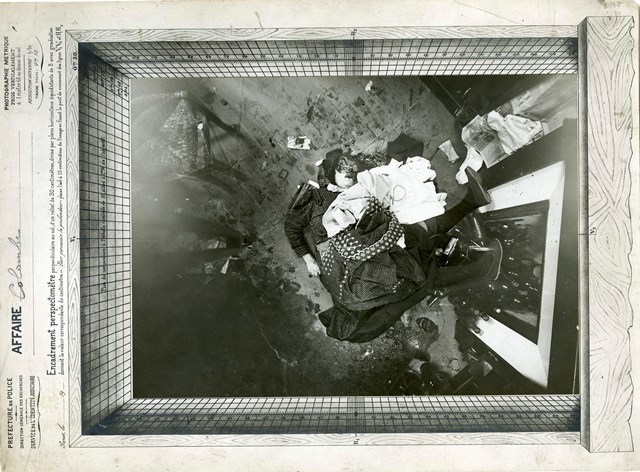
View of a crime scene from Wellcome Collection's Forensics exhibition
The surprising conclusion of our brief chat was the general agreement that so long as objects were provided with context and treated with professionalism, we should be taking more risks with sharing with audiences the uncomfortable or complicated objects in our collections. Just look at the success of the Wellcome Forensics exhibition which contains incredibly graphic images of dead bodies, and yet when its contextualised with both art and research, audiences are clamouring for more. Maybe we need to give both our audiences and ourselves a bit more credit for our ability to handle museum's sometimes haunted past with professionalism and clarity.

Do you have a favourite artefact, collection, or type of object that you think isn't getting enough love in your museum? Tell us all about it with the hashtag #whocares!

If you really love your stored collections or have ideas about how they can be shared with the public, why not submit a paper for the upcoming Who Cares conference at the Science Museum in November? Deets here: https://whocaresinterventions.wordpress.com/the-conference/ 


);