Ministry logo

Ministry logo
Showing posts with label tate. Show all posts

Monday, 28 April 2014

Tube strike hack: museums on the go!

It seems all that anyone can talk about in London this week is the tube strike. And can you blame us? Not only will it take hours to get to work, sitting in traffic (if you are lucky enough to be sitting) but it is seriously cramping our museum social style! But fear not! Even if you have had to cancel your plans to trek home on foot, you don't have to miss out. We've assembled a list of amazing online tours, galleries, exhibitions and archives that all you to experience all the wonder of museums without even leaving your bus seat: 

You might be here, but you could be in a quiet gallery via your smartphone. 


Tate Audio Archive


Victorian trade card for a 'pyrotechnis'


Mod style from the Design Museum

Sunday, 5 January 2014

MuseTube: Satisfying our Museum FOMO

When did YouTube become a vital part of a museums marketing strategy?  A recent outpouring of mini documentaries, behind the scenes peeks and advertisements have entered the stratosphere usually dominated by fancy posters lining the bus stops of London.

Unlike hour long BBC 4  documentaries exploring niche topics and asking probing questions these YouTube mini documentaries provide a quick snapshot of information for the social media generation. But the aims of such film clips fit uneasily across many museums mission statements, they are providing collections access, interacting on social media but do they increase footfall? It's difficult to tell, yet Museum's on Youtube or 'MuseTube's' are dominating our social media timelines. 

We're all aware that the majority of London's museums are accessible on Twitter and Facebook but few are taking advantage of the enthusiastic need to peruse museum videos whilst sitting at home in our pants.  Tate as always appear to be leading the 'Muse-tube' revolution, the field is dominated by their in- house 'Tate Shot's' team. Finding new ways to view the collection their Youtube channel features comedians exploring the galleries,celebrity bakers interpreting paintings and researchers explaining the importance of works.


But the videos are not made only  for the internet. If you decide to put clothes on and head into the galleries you will see that throughout Tate Britain and Tate Modern the films are displayed in those spaces where paintings are not. At Tate Britain  an odd corridor is filled with several screens showing the numerous curators discussing their favourite pieces and how the chronology of the rehang works.


The Science Museum have recently followed suit with  'Mind Maps: Stories from Psychology' where visitors are invited to watch the 2 minute video clip introducing the exhibition upon entering the space. Yet the same video was released on the Museum's Youtube, Twitter and Facebook days before it opened, acting as a  virtual invitation to the show. 


There is no doubt that with so much going on in London's museum these examples are comforting our museum FOMO (fear of missing out) and we're approaching galleries and exhibitions with a pre-conceived idea of what they will be like. Nonetheless this is a great tool that museums can use, gently dispersing our FOMO the Science Museum made sure that we didn't miss out when redeveloping the Shipping Galllery. When the permanent gallery closed in 2012 the museum made a lot of fancy cameras take 275 laser scans and two million point measurements to ensure that the space did not become a figment of imagination and provided an ever present virtual tour.


Thanks to the Horniman's YouTube team we've even been able to go behind the scenes and learn how to transport an overstuffed walrus to the seaside.


It’s also great to see museums and galleries using YouTube to express their politics and join in on a YouTube phenomenon. Led by artist Anish Kapoor and featuring the Serpentine, galleries do Gangnam style.


But perhaps the best selection of MuseTube videos comes from outside of the UK - the Mutter Museum in Philadelphia.  The medical museum's YouTube channel features clips like a ‘Mutter Minute’ and ‘Guess what’s on the Curators desk.' And they are definitely encouraging new crowds (We’re always free for a trip to Philly Mutter Museum!) and providing exceptional collections access that can hopefully influence others.


 MuseTube videos are finding exceptional new ways to engage with audiences and although they may or may not be increasing footfall they are helping us to conquer the fear of missing out and I am particularly thankful that I can explore collections in my pants.

Saturday, 23 November 2013

Art Under Attack: Get your meat cleavers and crowbars

We have been really excited about the Tate Britain’s new fabulously titled exhibition exploring iconoclasm in British Art. Despite the somewhat distracting salmon coloured wall paint, we have emerged educated, energized and wondering why more art doesn’t provoke attack.

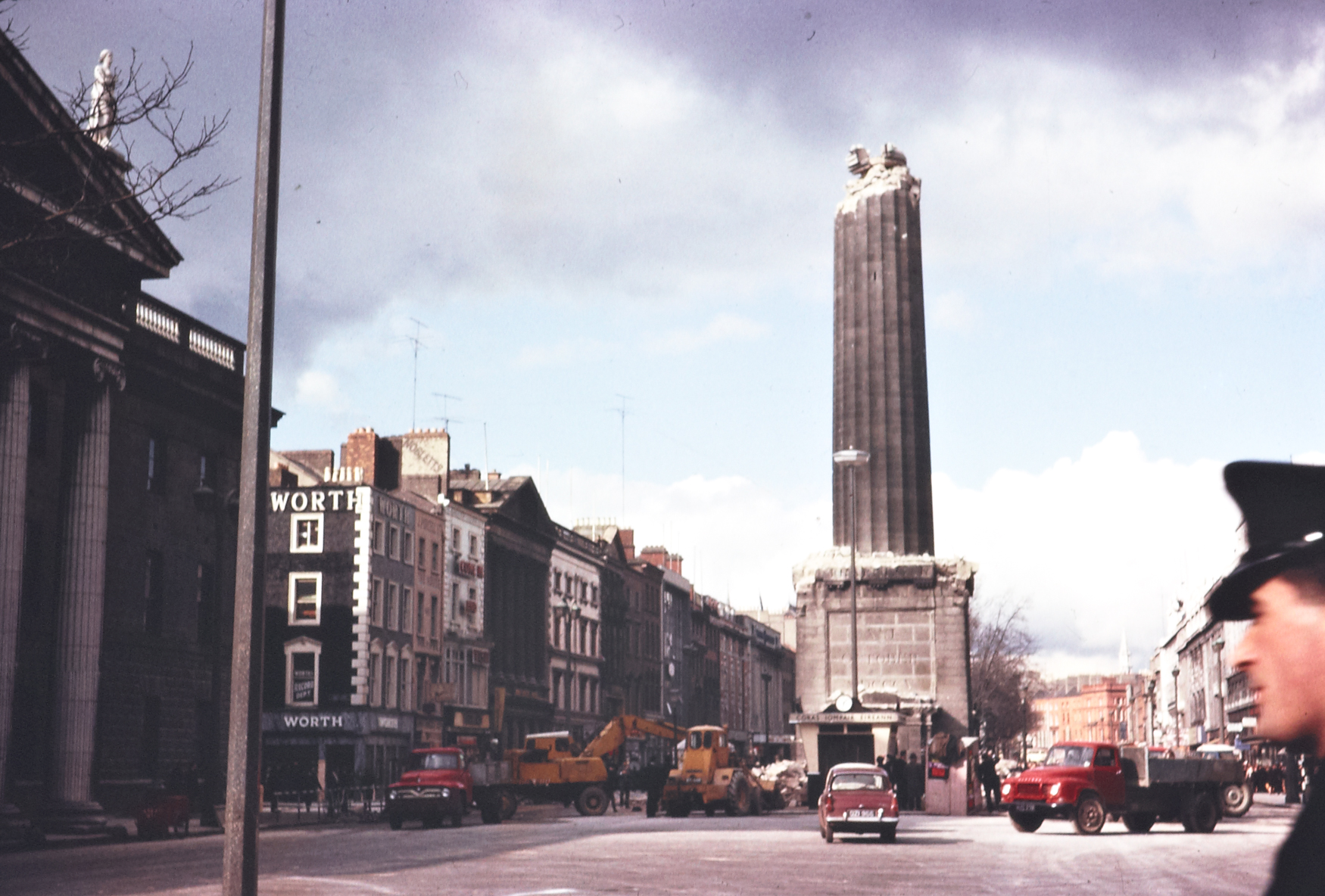
The exhibition starts out much as you image it might- with the Dissolution of the Catholic Church. The objects in this area are undoubtedly interesting, although personally I tire quickly of beheaded stone statues and stained glass. If religious art and theological conflict isn’t exactly your thing, fear not. Once out of the religion section and into the luridly coloured ‘Politics’ rooms, things pick up significantly. Towering stone icons of power and subjugation crumble in the face of angry crowds and bombs. From the enormous (Nelson’s column in Dublin) to the minuscule (Victorian coins), the people lash out against power via art. There’s nothing wrong with the Tate’s display of religious iconoclasm, but as a visitor I found it much easier to feel animated about bottom up revolutionary actions rather than top down destruction of art driven by a King’s desire to divorce his wife.


The two rooms of ‘Politics’ are undoubtedly the exhibitions show stoppers. The defaced coins from the Timothy Miller collection are both powerful and hilarious. One Victoria copper penny from 1841 has been faced with the word ‘shag’ etched into the monarch’s face and a pipe inserted into her mouth. Coins, sometimes the only artworks widely availably to the poorer classes, prove a powerful statement of the voiceless asserting their own opinions. These harmless acts of iconoclasm are contrasted with the bombing of Dublin’s Nelson’s Pillar in 1966 accompanied by a British Pathe news report. These rooms make really excellent use of multimedia in the forms of interviews, videos and recordings- something more art galleries should be doing!


Speaking of fantastic multimedia, please do not miss the interview with Mary Richardson, the Suffragette who attacked the Rokeby Venus in the National Gallery in 1914. She is hilarious and less than remorseful about her actions. She just really didn’t like that painting she says, and sometimes as a pick me up she goes back to the Gallery to view it with meat cleaver slash marks in place. The destruction of idealized female figures in art galleries is an interesting issue within the history of the Suffragette movement. In a time where the Suffragettes are remembered in lavish period pieces shouting ‘Votes for Women’, the cleaver wielding arsonists shown in this room are a sharp reminder of the darker more violent side of the movement.


Things get decidedly more ‘Tate-like’ after this point. White walls and modern art that asks whether art should be defaced despite being offensive. ‘This is just a pile of bricks!’ my friend exclaimed. ‘I’d dump paint on them too.’ Audiences attacking art, artists attacking art, art that uses destruction to tell new stories – it’s interesting but not a revelation.


The entire exhibition left us asking, why don’t we get angry about art more often? Art is there to provoke reactions and maybe anger, destruction and even iconoclasm can tell us more about ourselves and our era’s feelings on power, representation and repression. As Mary Richardson said, the first reaction to an attack on prejudice is always hate before action.

Art under Attack: Histories of British Iconoclasm is on at Tate Britain until the 5th of January http://www.tate.org.uk/whats-on/tate-britain/exhibition/art-under-attack-histories-british-iconoclasm

Wednesday, 7 August 2013

Prancing to Playlists: Museums on Spotify.

Maybe it’s just us, but museums seem to be everywhere at the moment? We live and breathe museums whether it’s starting the day with a mug from The Museum of London gift shop, working in one or spending our evenings checking out events. Here at The Ministry we just can’t get enough, and luckily for us their large presence on social media and collections online means that we can be part London’s museums 24/7. So it’s not too much of a surprise that they have even found a place on our favourite free music player is it?

When recently bopping along to some very cheesy music on Spotify I was interrupted (of course I can’t afford to pay monthly fees on a museum wage!) by an advertisement for Lowry: The Painting of Modern Life at Tate Britain. ‘Eh?’ I thought to myself is this really the best way to advertise something so visual? London has been inundated with those matchstick men stomping across posters on the underground and every other wall space in London this summer.  Is it a bit of a sneaky reminder that when I’m shaking my bum to Rihanna I must go and do something of cultural significance or just my Museum geek guilt?

I soon found out however that not only was there an advertisement but a whole Playlist inspired by the Exhibition produced by Tate.  Created by Adrian Shaw, Programmer for Late at Tate he often draws connections between music and art for the Lates. Offering a bit of ‘northern realism’ through The Smiths, working class culture with the Verve and a commentary on Thatcherite Britain by Billy Bragg Shaw the Lowry playlist attempts to echo the moods of the show.  

Upon conducting some more research I found that Tate wasn't the only one engaging in this musical outreach. The V&A have a playlist dedicated to the Post Modernism exhibition of 2011 – 2012 celebrating the music of the 70’s and 80’s ‘when style became an attitude and postmodernism ruled’ But it’s the Museum of London who has perhaps the most comprehensive playlist, not only frolicking on the links of art and music but with playlists inspired by permanent displays, exhibitions, events and even their film club. 


I’ve even heard from very reliable sources that the Horniman are in the later stages of creating a playlist including little gems like this.Horniman advert.


All very exciting for the non stop museum geek like myself. But what is the marketing strategy behind these? A recent  survey conducted by the Digital Media team at the V&A for the Online Managers Forum discussed statistics about ‘what visitors say about using mobile devices in Museum's'.  Typical use of Wi-Fi and engaging with younger audiences came out top. But they also found that participants responded well to the idea of music related to period or place.


However with such playlists its unclear where their use should take place in the museum or at home? I myself would hate to visit a calm and quiet gallery disturbed by the tinny feedback of headphones.  But in a sound appropriate area I think it’s a great way to engage audiences, encourage contextualization and get down to some new  tunes. 

Saturday, 11 May 2013

Online Exhibition Review: 'The Gallery of Lost Art'

 The Gallery of Lost Art is a free online exhibition by Tate where you get to hear about what museums don’t usually like to discuss… That sometimes works disappear. Tate have collaborated with Channel 4, ISO and the Arts and Humanities Research Council for the yearlong  exhibition where you learn about works that you will never get to see.  Launched in July 2012 I hadn’t paid much attention until this week when  I  spent a whole evening insatiably devouring the content. With it's amazing online interactivity, interface and unusual concept no wonder it won the Art prize at the SXSW Interactive Awards in March.


Is this a new way to look at online collections? I think so; the last two years have seen the majority of National Museum invest in a standardised collections management approach to making their objects available  for all to see on the internet. The Gallery of Lost Art has broken down this format to create something instantly refreshing, using archival material to reimagine and bring life back to 'lost' art works makes this virtual gallery space very dynamic.


The Interface lets you learn from documentation laid out on a table.


The website explores the concept of ‘loss’ and famous pieces of art (some owned by Tate) that have disappeared. Organised in categories of attacked, destroyed, discarded, ephemeral, erased, missing, rejected, stolen, transient and unrealised each group is contextualised by  the voice of Jennifer Munday (Head of Collections Research). To explore you are invited to click the contents of a virtual table and immerse yourself in all that is left of the works, fragments of archives, newspaper cuttings and film footage.


As expected the virtual tables present  the high profile stories of thefts  such as Freud's 'Portrait of Francis Bacon' stolen from a Berlin Gallery. And those that simply disappeared like the father of contemporary art Marchel Duchamp's 'Fountain.' that since its famous rejection from the Society of Independent Artists 1917 has been missing.

 But through my exploration  I soon learnt that there are works that artists never wanted to be ‘museumised.’

 Jean Tinguely’s ‘Homage to New York’ described  through fragmented press releases, a short film, photographs and an essay I became immersed in the works story. 'Homage to New York' only lasted half an hour in the sculpture garden of New York’s Museum of Modern Art in 1960. The artwork a mass of scraped objects and metal pieces was designed as an ‘auto destructive sculpture’ and thus was mostly destroyed the piece as a whole became ‘lost.’ 
Jean Tinguely’s ‘Homage to New York

The transient category also referred to the work of Anna Gallaccio whose ‘Preserve Beauty’ is currently on display in Tate Britain’s new galleries. Wait, how can a lost piece of art be on display? Well Gallacio's work presents the deterioration of flowers. Originally exhibited in 1991 the work contained 800 flowers initially beautiful as they decayed the art became forever transient and therefore forever ‘lost’


 Anna Gallaccio ‘Preserve Beauty’ 

With new content added every six weeks the online exhibition expands to maintain interest. It's interface, use of documentation and its celebration of long lost art make it a highly addictive website, so I recommend spending a good afternoon sifting through all of the amazing information and pining over what could have been.

Visit the Gallery of Lost Art 24 hours a day @
http://galleryoflostart.com/#/0,4 Until 2nd July 2013. 

Follow the exhibition...
 on Twitter: @Gallerylostart

Tuesday, 23 April 2013

Interpreting Lichtenstein: a few thoughts on labels


I know that we have already written you a review of the Tate Modern’s blockbuster Roy Lichtenstein retrospective but I myself have only just gotten around to visiting. I can therefore say confidently, yes it is indeed amazing. I love Lichtenstein as an artist; in fact I have a poster of ‘Drowning Girl’ hanging in my flat as we speak. As a retrospective Tate gives us even more of Lichtenstein than the few iconic images we already know. You get to explore his black and white period (wow), his sculpture (who knew?), his renditions of famous artworks (like Picasso but with dots!), his slightly unfortunate early abstract expressionist paintings (yikes) and even his last series of Chinese landscapes from the 1990s. You should go, its great.


But I am not here to talk about whether Lichtenstein is or isn’t an artistic genius, I want to talk about this exhibition’s labels. Seriously what is going on with them? I couldn’t help but laugh as we read aloud the near Saatchi-esque level of pretention. Shall I name but a few?

‘His restricted palette laid bare the reductive nature of commercial images. Do those jagged lines really depict a tyre tread?’ – Yes this do, this is a picture of a tyre. And although I am sure Lichtenstein was indeed interested in commercial imagery, I love the overdramatic use of the term ‘laid bare’ and the rhetoric question to follow it up.


‘Ever since Leonardo da Vinci called the true artist a ‘mirror of nature’, mirrors have symbolized paintings itself, and their depiction within paintings has been a sign of the artist’s mastery’.- Hold up, are we still in a pop art exhibition or what? You know I love Lichtenstein, but did we just compare him to Leonardo da Vinci? Or  does this curator just really love the whole concept of mirrors. If I paint a mirror am I a master artist? I think what I love best about this quote is that it starts ‘Ever since’. Always a good start. Ever since the dawn of time man has strived to encapsulate his emotions through the medium of ART.


‘Unlike many artists, Lichtenstein did not use live models for his depictions of the female body; instead he returned to his archive of comic clippings to select female characters as subjects- and then literally undressed them, by imagining their bare bodies under their clothes before painting them as nude.’- Just a few quick thoughts on this one then. First of all, I don’t think you can ‘literally’ imagine something. The use of the word ‘literally’ here seems bizarre. Secondly, this is an enormously long sentence for saying, ‘Lichtenstein based his later nudes not on live models but from female characters in comic strips.’ The high drama of this label can be best appreciated by reading it aloud in your best ‘come hither’ voice.


‘The female presence is ambiguous, with Benday dots that break the conventions of chiaroscuro by overlapping and eliminating the fleshy contours of her body to blur the distinction between figure and background’- Gaaahhhh this is why you art people drive me crazy! I know that this is a legitimate art criticism but the use of the words ‘ambiguous’ ‘chiaroscuro’ and ‘fleshy’ make me cringe.

I would then like to propose my own subversive art project. I will curate my own exhibition of… well it doesn’t really matter what it is, just through some random art in there. I will then proceed to fill the entire gallery with my ‘Since the down of time’ style labels. Expect to find the words ‘discourse’ ‘ambiguous’ ‘gender roles’ ‘compressed space’ ‘sensuality’ ‘subversive’ and ‘profound’ in overabundance. I am thinking something along the lines of :‘Here the artist breaks with convention by subverting commonly accepted notions of sensuality and gender roles by replacing them with a counter-cultural discourse which literally turns on it’s head our modern conceptions of space, place and time.’

At the end of the exhibition we will ask visitors whether they noticed anything a bit strange about the labels. Who wants to bet the general public would just accept it as normal art speak? C’mon, you know some art gallery somewhere loves this idea.

 If you would like to sponsor the Ministry of Curiosity’s ‘The Most Art-y Art Exhibition in the History of Art’ please get in touch with us @curiositytweet

Saturday, 23 March 2013

The Ministry's Gift Shop Guide.

Here at The Ministry we love the gift shop just as much as the exhibition. How else can you feel like a collector on a Museum professionals salary? Well, we have found ten of the best pieces in London Museum's Gift Shops for under £30


Thanks to That Fall by Naomi Campbell in the 90's
I'm far too scared to ever wear platforms this high but I
can still ogle Viv Westwood's beautiful shoes with
this postcard 
70p @  V&A


Who doesn't want a giant pen lid as a desk tidy.
At least you can't choke on it.
£11.95 @ Design Museum
It looks like she needs a cuddle. 
Grab this cushion cover for only £15 from Tate
Make a mistake and let David Bowie
correct it with this rubber
£1.50 V&A

Every Cabinet of Curiosity needs an indication that
you have been somewhere or are planning to travel.
This book is the perfect starting point and its colourful!
'Folio Society: What are the Seven Wonders of the World'
£24.99 @ British Museum
Isn't Vintage style apothecary a darling?
 For only £10 @ Museum of London
you pretend you're a medical collector like Henry Wellcome.
It couldn't get any cuter! Influenced by Ice Age Art
Exhibition the British Museum have these Mamommoth Tagua
Necklaces for £24.99. And it's fairtrade.


It's a Lego Lunchbox!
£10 @ Science Museum
Ermmm, so I found this 'Poo in a Box'
 @ Natural History Museum for £5
It's basically a great fertile starter to grow the sunflower seeds provided.


We all need a momento like this so we can ask ourselves
What Would Darwin Do?
This 11cm high Charles Darwin Bust is only
£18.00 from @ National Portrait Gallery


Sunday, 24 February 2013

Lichtenstein: Driving Me Dotty.


Pow! Lichtenstein: A Retrospective has finally arrived at Tate Modern and on Wednesday I was lucky enough to attend the preview with my entourage, well. My Boyfriend, Mum and Granddad. The show is 2013's blockbuster at Tate and after last year’s Damien Hirst Retrospective London is expecting Lichtenstein to knock her spotty socks off, and London I will tell you now your socks won't last long so go barefoot. 


My entourage for the evening came in a range of expertise and interest. I am a pop art fanatic and lover of Lichtenstein along with my Mum and Granddad. Whereas my boyfriend (an archive lover and comic book enthusiast  proclaimed on arrival that he had never heard of Lichtenstein. This blew my brains, 'Didn't you study him at school?' 'Nope' 'Do you recognise any of this?' ‘not right now, and isn't it just comic book strips?' My Granddad however has watched documentaries, read books and studied the way he paints, and told me all about how Lichtenstein painted his lover, designed stencils to make the dots and pointed out where the stencil had been moved before the paint had dried. And my mum walked round soaking it all up, 'eeking' at her favourite pieces and furiously facebooking her friends about where she was. 

Whaam. 1963.


Look Mickey, 1961.
The range of works in the show were fantastic, there was the most famous pieces 'Whaam' and 'Look Mickey' but what I think will really make it a blockbuster are the pieces that you wouldn't expect from Lichtenstein; the 1920's inspired brass sculptures and the breath-taking landscapes. 

 Litchenstein is world renowned for those little repetitive dots (known as ben-day dots)I feared seeing a retrospective I would get sick of them. But the dots,  inspired by comic books and consumer advertising didn't seem repetitive in the show, instead I wanted more dots and to go home with dotty things and cover myself in dots.

Whilst we're on that this is possible the best dress up from my friend Francesca Bartha:


My entourage loved Lichtenstein even more on exiting, the boyf recognised a lot of the work, loved learning about how old Roy was inspired by comics and concluded that the show was ' Bang! Wham! Pow! Poptastic' (and I even got a gift from the shop :D) My Mum and Granddad went a bit mad in the shop getting their paws on some awesome Lichtenstein cushions.

 Nothing like taking home a souvenir from a good exhibition. 

Lichtenstein: A Retrospective is on at Tate Modern from 21 February – 27 May 2013

);